Author Archives: paul

About paul

Paul is the Owner and Creator of MawsonLakes.Org.

The Advertiser – Clothes theft in ram raid

From the Adevertiser, Saturday, May 9 2015, page 33:

“Clothes theft in ram raid: A stolen car has been used to ram-raid a Mawson Lakes business.

Police were called to Main St, about 5am yesterday, after reports of a car reversing into the building. Two men stole the clothes from the business and fled in a white Holdern Commodore, registration VGT-453”

Link

Hosting of New Websites

MawsonLakes.Org is pleased to announce that we will be hosting two websites for the Mawson Lakes community.

  • Mawson Lakes Community Church
  • Monstersale – A fundraiser for the Mawson Lakes Community Church.


New websites being hosted

MawsonLakes.Org is pleased to announce that we will be hosting two additional websites for the Mawson Lakes community.

  • Mawson Lakes Community Church (mlcc.com.au)
  • Monstersale (monstersale.mawsonlakes.org) – A fundraiser for the Mawson Lakes Community Church

These sites are currently under development.

New Website for MawsonLakes.Org

Greetings gentle readers.

Welcome to the new 2014 website for MawsonLakes.Org. After several years away from the Internet, we have returned with a brand new website, with the aim of promoting all things Mawson Lakes, and anything else that may be of interest to the Mawson Lakes community

My Anderson Powerpole Connector crisis is over..

After forking out $5 for a single set of Anderson Powerpole Connectors from Jaycar I thought that I would bite the bullet and purchase enough from the US supplier so I wouldn’t have to worry about this any more.

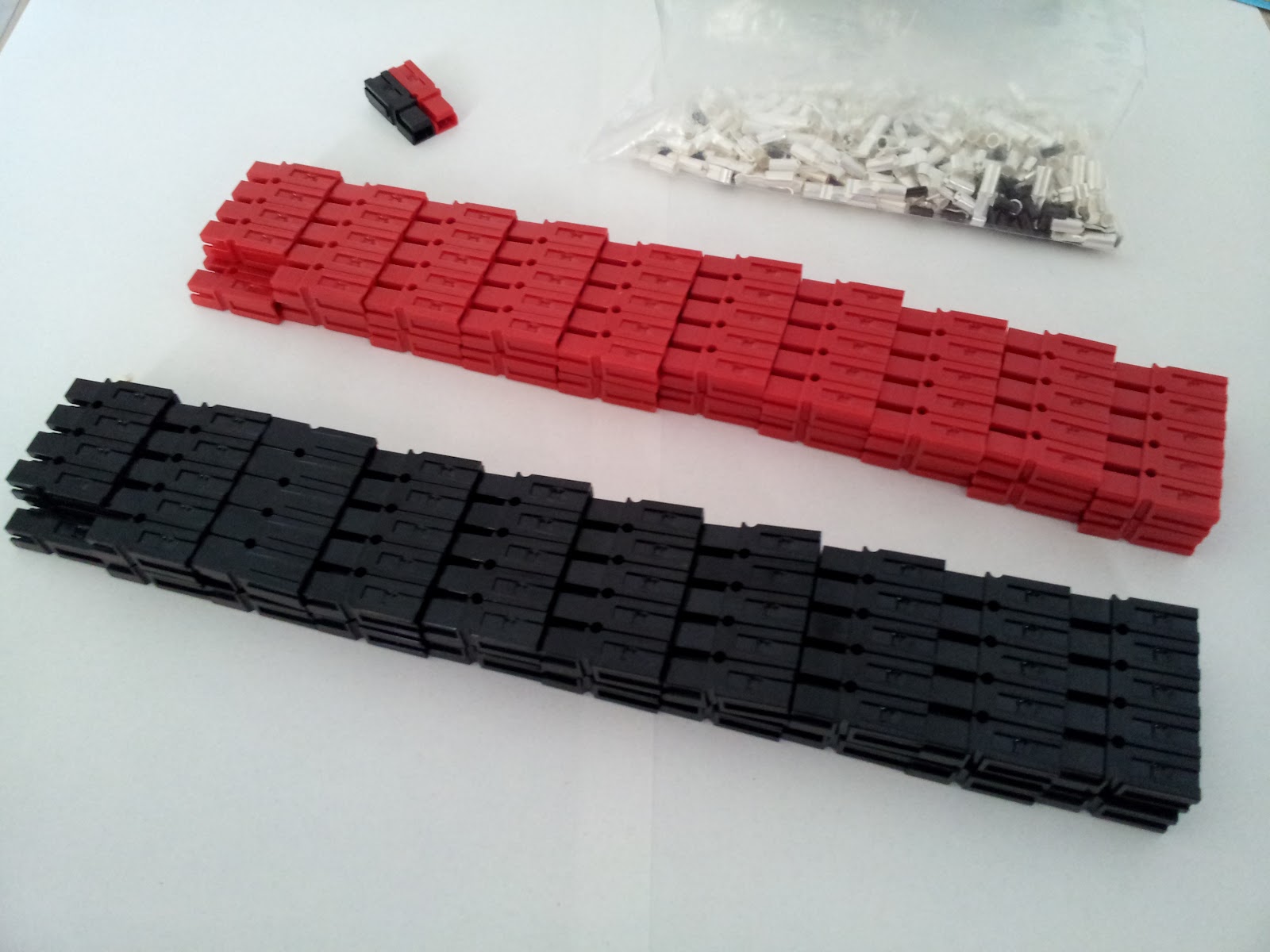
The above photo shows the connectors in groups of ten, so I could easily count them. I purchased 100 sets from Powerwerx at $0.87 each including shipping, just in time for the Amateur Radio John Moyle Field day.

Box for Huxley Reprap

I have been involved in constructing a couple of Huxley Repraps, purchased from RepRapPro as kits. One is for myself and the other is one for the Adelaide HackerSpace. (The plastic parts distributed in the kits were created on other RepRaps.)

In order to be able to design things to print I am going to have to get my head around using CAD. FreeCAD looks like it will do most of the things that I need a CAD program to do, so I have spent a some time learning how to use it by drawing up a box that can be used to store, carry and display the finished Huxleys.

It is a 32cm cube, to be made out of 9mm MDF, with rebated joints (glue and nail).

The Huxley will be bolted to the base with the box fitting over the top, similar to a sewing machine case I once saw. A method for keeping the base attached to the box has yet to be sorted out, although a sash-clamp/tie-down appears to be the easiest solution.

The inside dimensions are 302x302x302 where the Huxley (according to my measurements) is 295mm high.  Everything should fit… but I need to measure the other dimensions and adjust accordingly… 320mm was a nice initial number to work with.

I haven’t figured out a way to make the circular cuts with the CAD program, so the handle slots are all square.


Update: The box ended up being 360mm square.


Powering the OLPC XO-1

Another device that I thought would be worth trying out with the generator is the laptop from the One Person Per Laptop project, the XO-1.

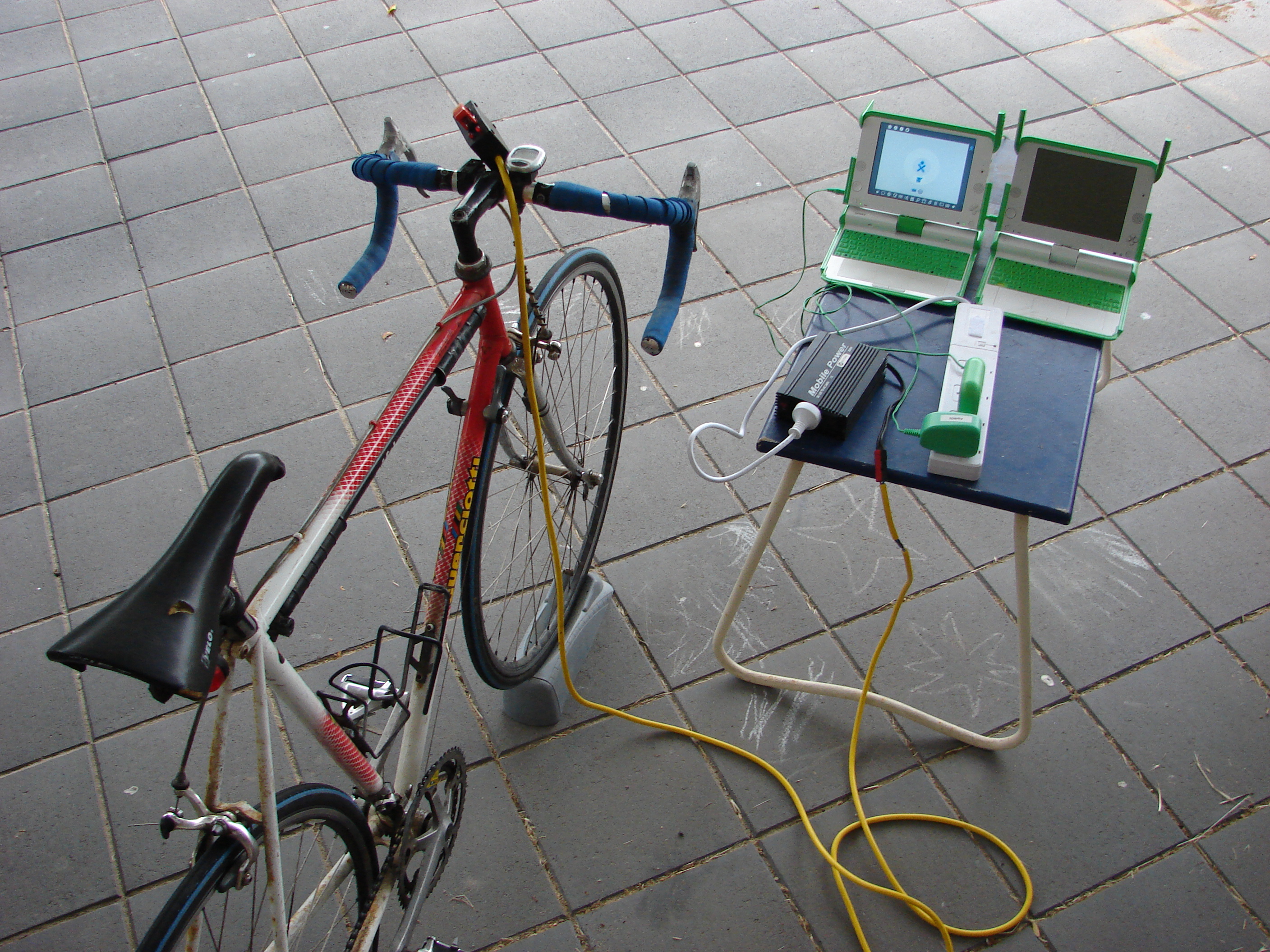
I have been fortunate and have acquired two of these XO-1’s (sparky and sparks). Both of them were pre-release versions and have been superseded in various ways, but they still attach attention when brought out on display. Kid’s just love them.

Both XO’s were able to be run via the inverter from their charge packs. (One of them has an issue with it’s battery taking a charge, which is why it is off in the photo.)

When I get some more Anderson connectors I’ll look at how they go when connected directly to the 12v-14v supply.

First Power Generation Application

I didn’t have any luck finding my 240V inverter, but I was able to borrow one from a friend (in exchange for fitting it with an Anderson Powerpole connector.)

So, you have a peddle powered generator.. what’s the first application or device that can be tested with his new power source? Being Australian and and an Amateur Radio operator, the first device had to be a radio. (For overseas readers, Australia has a proud history of peddle powered radios, which together with the Flying Doctor service, brought emergency healthcare to the centre of Australia.)

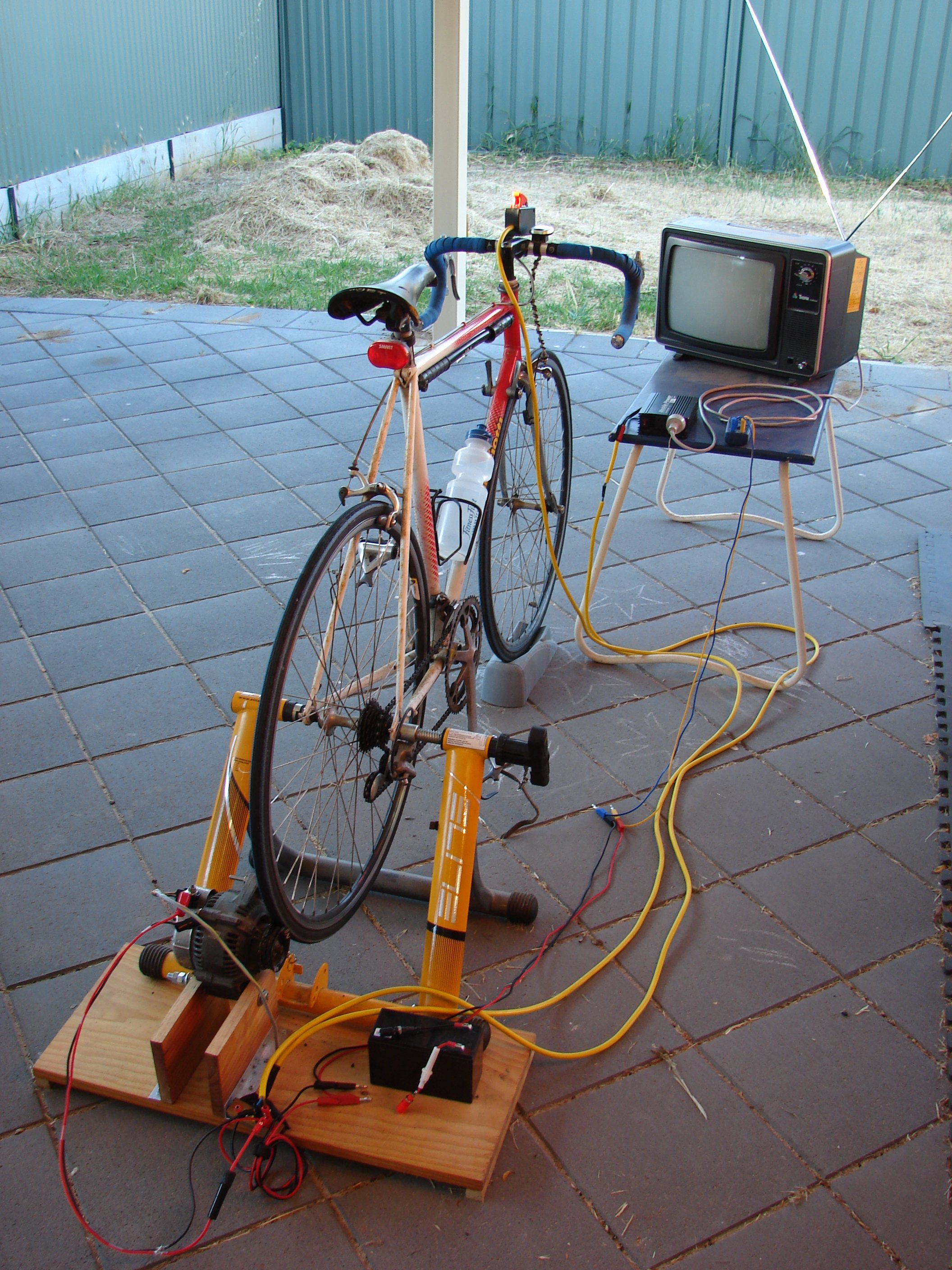
The second application was therefor a peddle powered television.

The small television did not have a rating listed on it anywhere, but after peddling for 30 minues or so, while catching up on the evening news, I would say that it is about 25 or 30W. It is uncertain what the efficiency of the inverter is at this stage.

I see this setup quickly becoming a core part of my exercise program.

Anderson Powerpole Connectors

With my increasing number of 12V appliances, thoughts quickly turned to what would be an appropriate standard power connector. In the past, these appliances have had a huge range of different sized cylindrical or barrel plugs with different polarities, typically powered by a 240V plug pack.

One DC power connector which has gained some prominence is the ‘Powerpole’ or ‘Anderson’ connectors. These connectors have been chosen as the standard DC power connector for Amateur Radio operations, particularly where emergency and disaster relief operations are in mind. (eg. with WICEN)
These connectors have a couple of unique features. The most obvious is their shape.The ‘plug’ and ‘socket’ ends are identical (and symmetric) and can be used as either end of a connection. The blade contacts themselves are self cleaning, in that the motion of connection and disconnection allows the terminals to scrape any foreign material from the electrical connection area.
For those mathematically astute people, the connectors are symmetric under a rotation group. (Look out for further discussion of this in another blog post.)
The connectors come in several different ratings, but for the most common sizes for which I’m interested (15amp, 30amp and 45amp), they share the same plug enclosure, but take different sizes/gauge of wire.

There was some research required to relate the US wire specification (maximum current and gauge) with the Australian ratings (maximum current and cable cross section.) Bunnings sells cable for outdoor lighting, which had a cross section of 3.3mm^2, which corresponds to 12 gauge wire, the size that is rated for 30amps. This cable is twin core and all black, not the pretty red and black ‘zip cord’ that is available from the Anderson Connector distributor, but I can’t see any reason why it wouldn’t work.
For more information on Anderson Connections see the Powerwerx website (a distributor).

Pedal Power Update

A very useful site is the one for Bosch, which produces the after market replacement and spare engine alternators. The PDF downloads from this page have all the technical specifications of the alternator for each vehicle engine type. (Ed Update: Google ‘Bosch Alternator Wiring’ should find the details that you are after.)

The budget

Someone has asked about what the budget was… I have spent maybe $250 up to this point, but now knowing what I need it would be a little less. Some things could be purchased on e-Bay etc.

  • Bicycle – Already had this, and can continue to be used as per normal.
  • Bicycle trainer $115 on ebay (mine was new) (eg. http://shop.ebay.com.au/?_nkw=bicycle+trainer) Remove and throw away resistance roller.
  • Alternator $55. From City Dismantlers, Gepps Cross (Toyota Section) Connecting plug – free – worth asking for it when you get the alternator, as mine was stripped from the wiring of a wreck.
  • Old wooden shelving $??. It’s what I had lying around.
  • Assorted Hardware: screws, bolts, toggle maybe $60. I used stainless steel toggle for tensioning, and Stainless U-bolts to clamp the trainer to the board. (Not the cheapest solution, but reusable parts.)
  • Aluminum L section (cut and drilled to suit) $6 Purchased from Bunnings in 1.6m lendth.
  • 12V Battery (required) $28 from Jaycar 12V 6AH Sealed Lead Acid. No reason for this specification other than this is what I had around.
  • Switches with ‘missle cover’ $12. Always wanted on of these I want to install add a couple more.. a second one to switch the ‘load’ on… alternator has some trouble starting to generate if another load is pulling from the battery, and on to isolate the battery.
  • Spade and Blade Crimp connectors $2.75 (per pack of 8) Various sizes. Still need to find proper size for battery terminal connection to alternator.
  • Cables $?? Scavenged from various bits and pieces. Plan to use regular extension cable (from Bunnings) to extend ‘Ignition’ and ‘Load’ switch so that they are accessible from the handlebars while on the bike. (I might have to rethink this as these are rated for 10A AC, and some of the applications that I am looking at use 30A rated wire.
  • Anderson Connectors $5 pair from Jaycar. I would like to replace the spade and banana plug connectors that are currently being used, with Anderson 30A connectors where ever possible. (This will be the subject of another blog post with links.)

I have also bought a couple of boxes from Jaycar to mount these swithes, as well as two LED’s (and resistor) that replaces the usual ‘charge lamp’.

Other considerations/thoughts/things to try..

I have tried making a radio call from the bike, powering my Handheld radio. There was sufficient noise on the supply to be heard on the output, while both receiving and (as reported) transmitting. Some work needs to be done to remove this (Large Capacitor + something else.. got some Amateur Radio friends on the case).

I have a small 240V inverter around somewhere. If I find it, I’ll see if it is possible to run a small TV directly while peddling.

A summary, of sorts.

Nothing in this project has really been engineered so I would like at some stage to take a bunch of measurements and do some calculations on the systems efficency etc.

For example, I would love to get a ‘current clamp’ and get some measurements of the running generator under different loads.

The alternator has a build in voltage regulator, which works by modifying the current in the rotor windings. This means that the choice of peddling rate doesn’t particularly matter (voltage remains the same) and the gearing is sufficient to spin up the alternator to fairly high RPM’s if required (calculation required).

Thanks everyone for your interest.


Update Fri, 24 July 2015: Article transfered to new MawsonLakes.Org website. Minor edits and updates made.